

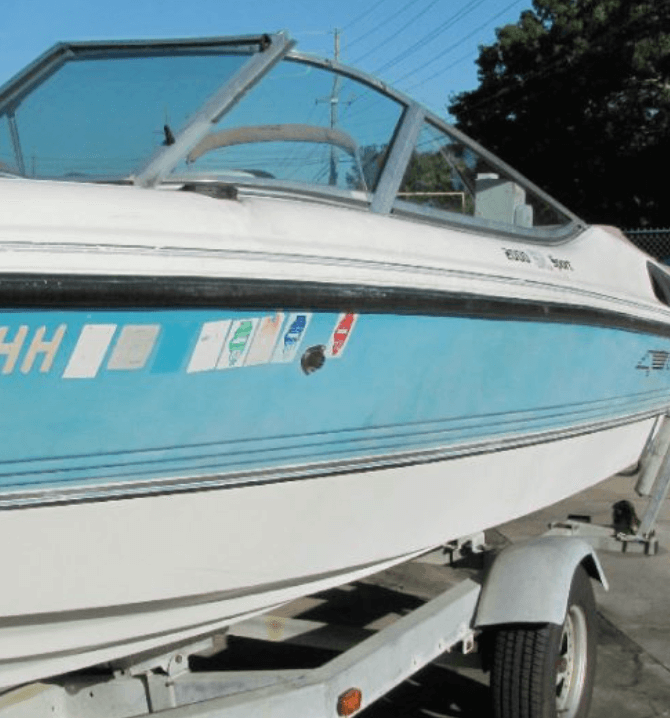
If your boat’s gelcoat looks chalky, dull, or uneven, sanding often feels like the obvious solution. And to be fair, it works in the short term. The surface gets smoother, the color comes back, and the shine looks promising.
But months later, the fade returns. Sometimes faster than before.
Here’s why sanding alone doesn’t solve oxidation and what actually does.
What Oxidation Really Is (and Why It Keeps Coming Back)
Gelcoat oxidation isn’t just surface dirt or discoloration. It’s a chemical breakdown of the gelcoat itself, caused primarily by UV exposure, oxygen, salt, and heat.
Over time:
-
UV radiation breaks down resins in the gelcoat
-
Microscopic pores open up
-
The surface dries out and turns chalky
-
Pigment loses depth and clarity
Once this process starts, it doesn’t stop on its own.
What Sanding Actually Does
Sanding removes damaged material, nothing more.
When you sand:
-
You shave off the oxidized top layer
-
You expose fresh but unprotected gelcoat underneath
-
You temporarily improve color and smoothness
What sanding does not do:
-
It does not neutralize UV damage
-
It does not seal the gelcoat
-
It does not restore oils or resins
-
It does not add protection
In fact, aggressive sanding can make oxidation return faster by thinning the gelcoat and opening it up further to the elements.
Why Oxidation Often Returns Worse After Sanding
Here’s the part most boat owners aren’t told:
Freshly sanded gelcoat is extremely vulnerable.
Without protection:
-
UV penetrates deeper, faster
-
Moisture and oxygen absorb more easily
-
The surface oxidizes again often within weeks
This is why many boats look great right after sanding… then dull out by the end of the season.
When Sanding Is Appropriate
Sanding isn’t wrong, it’s just incomplete on its own.
Sanding is necessary when:
-
Oxidation is heavy or flaky
-
Color is uneven or blotchy
-
Compounds alone can’t level the surface
But sanding should be viewed as step one, not the solution.
What Actually Stops Oxidation from Returning
To slow oxidation long-term, the gelcoat needs three things after sanding:
1. Refinement
A proper compound and polish are required to:
-
Close sanding marks
-
Refine the surface
-
Restore clarity and gloss
This step reduces surface porosity left behind by sanding.
2. Protection
Bare gelcoat must be sealed.
Effective protection:
-
Blocks UV radiation
-
Reduces oxygen exposure
-
Slows moisture absorption
Without protection, oxidation is guaranteed to return.
3. Maintenance
Even the best protection isn’t permanent.
Consistent maintenance:
-
Gentle washing (pH-neutral)
-
Periodic reapplication of protection
-
Avoiding harsh detergents
This preserves both appearance and gelcoat thickness over time.
The Big Mistake: Treating Oxidation as Cosmetic
Oxidation isn’t just about looks, it’s material degradation.
Every time oxidation returns:
-
Gelcoat gets thinner
-
Restoration becomes harder
-
Sanding options become more limited
Eventually, sanding is no longer viable.
The Takeaway
Sanding doesn’t stop oxidation, it resets the clock.
Without polishing and protection:
-
Oxidation will return
-
Often faster than before
-
Sometimes worse
The boats that stay glossy for years aren’t sanded more often—they’re protected more intelligently.
If you’re going to sand, make it count. Finish the process. Seal the surface. Preserve the gelcoat.
Your boat and your future restoration options depend on it.
Share:
Gelcoat starting to fade? How to Bring it Back Before It’s Too Late.
The Quiet Evolution of Gelcoat Correction: Why Smarter Chemistry Is Replacing Traditional Methods